


Every list of what makes a great team is true, and almost none of them will help you build one. The lists describe the room. They leave out what it costs to stand in it.
After ten on a Thursday.
“We need to do that section again. Bryan, you’re late in the second measure, and the intonation in that final chord isn’t lining up. You’re sharp.”
It was true. My colleague was right.
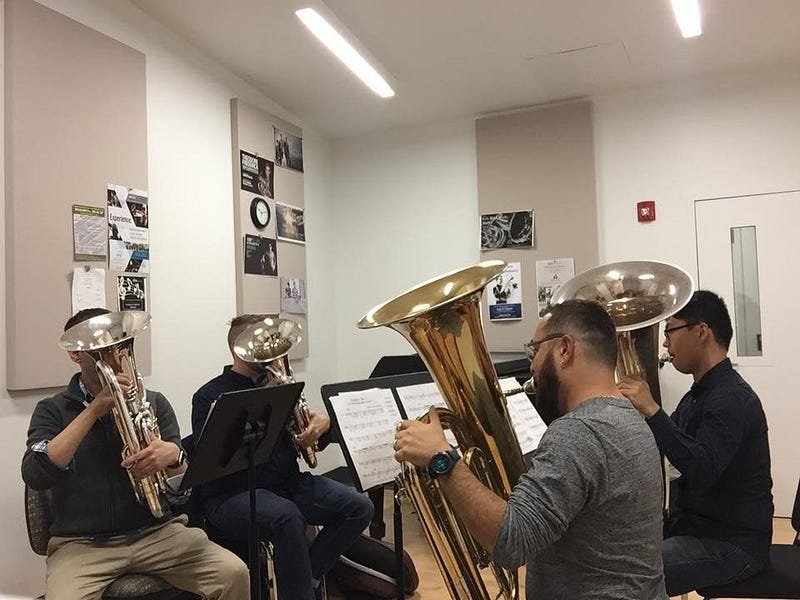
Our quartet had been rehearsing for over two hours. It had been a full day at work, then the gym, then dinner in the car on the way to rehearsal. It was after ten on a Thursday night, a competition was coming, and the pressure was getting to me.
“OK, let’s do it again,” I said. “I’ll get it this time.”
I didn’t get it. We spent fifteen more minutes on that section and ended rehearsal for the night. I packed up knowing it was on me to work that passage alone before we met again, and I drove home frustrated, with a sinking feeling in my stomach.
That night I was the thing wrong with my team. It took me a while to see what else had happened in that room.
The checklist is right. It isn’t enough.
In their book The Wisdom of Teams, Jon Katzenbach and Douglas Smith define a team this way:
A small number of people with complementary skills who are committed to a common purpose, set of performance goals, and approach for which they hold themselves mutually accountable.
Their research names six things a real team has: small numbers, complementary skills, a purpose that means something, specific goals, a clear way of working, and mutual accountability. Peter Hawkins, one of the leading voices in team coaching, adds the test that matters to everyone outside the team. A team is performing when it creates value for the organization, its customers, and the people around it.
I agree with all of it. And every item on that list was in the room that Thursday. We were four players with different strengths, a competition to prepare for, and a plan for the rehearsal. I was still late and sharp.
The list tells you what a team has. It can’t show you the moment the list gets used. That moment was one sentence, said out loud, in front of everyone, to the person who needed to hear it. Nobody softened it. Nobody saved it for the parking lot. And I didn’t need to be managed afterward.
The four of us are the team, and that night I was the thing wrong with it. Nobody had to be careful about saying so.
What made that sentence sayable.
None of that happened by accident. We built it, on purpose, over years. Four habits did most of the work.
We record ourselves. We tape rehearsals, listen back, take notes, and arrive at the next one with what we heard and a plan to fix it. Nobody argues with a recording, so the feedback stops being personal.
We agreed how we try things. When one of us hears the music differently, we play it that way, listen, and decide. An idea gets an experiment before it gets an opinion.
We prepare alone so we can work together. Each of us puts in several hours a week before we rehearse as a group. The team relies on me to know my part and play it under pressure. When I don’t, everyone can hear it, including me.
We pass the lead. Whoever has the line leads, and the rest of us hold back and blend to support it. The music asks you to step forward sometimes. Far more often it asks you to make someone else sound good. There are no soloists.
Underneath all four is the thing teams most often leave to chance: the relationships. We work on those deliberately and continuously, the same way we work on intonation.
Now look at your leadership team.
Your team probably has most of the list too. Smart people, a real purpose, goals on a slide. So ask the harder question. When someone on your team is late and sharp, who says so, and when?
In most leadership teams I work with, the sentence gets said in the hallway afterward, or in a review months later, or it never gets said at all. You can see it in what comes back around. A decision you already made is on the agenda again. Two people each believe the same call is theirs. Everyone shares one concern, and nobody has raised it.
A team like that is full of people being careful with each other, and being careful is expensive. Every problem takes longer to surface, and by the time it does, it has a history.
The leader is not exempt. The colleague who stopped our rehearsal wasn’t correcting someone junior. The four of us are the team. If the people around you can’t tell you that you’re sharp, you are the one player in the room nobody is allowed to hear.
One rep this week.
Set a goal before your next team meeting: one true thing gets said in the room that would normally wait for the hallway.
Then make it easy. In the last five minutes, ask one question and write down what you hear without answering it: “What were we careful about today?”
Don’t defend, and don’t fix. Thank them, and bring one item back as the first thing on the next agenda.
The first answers will be small. Ask again the following week. You’re building what we built in that practice room, one rehearsal at a time: a team where the hard sentence can be said out loud, and the person who hears it says, “Let’s do it again.”